Peptides play an increasingly important role in modern science, biotechnology, and medicine. As interest in peptide research continues to grow across Australia, many researchers and organisations ask an important question: What is the difference between research peptides and pharmaceutical peptides?
Although both are composed of amino acid chains, they are developed for very different purposes and are subject to different manufacturing, regulatory, and usage requirements.
Understanding these differences is essential for universities, biotechnology companies, contract research organisations, and laboratories sourcing Peptides Australia for scientific investigation.
At PremiumPeps, based in North Strathfield, NSW, Australia, we supply High Quality Peptides intended for laboratory research purposes only, supporting Australian researchers with reliable products and professional service.
Quick Answer
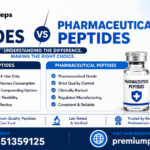
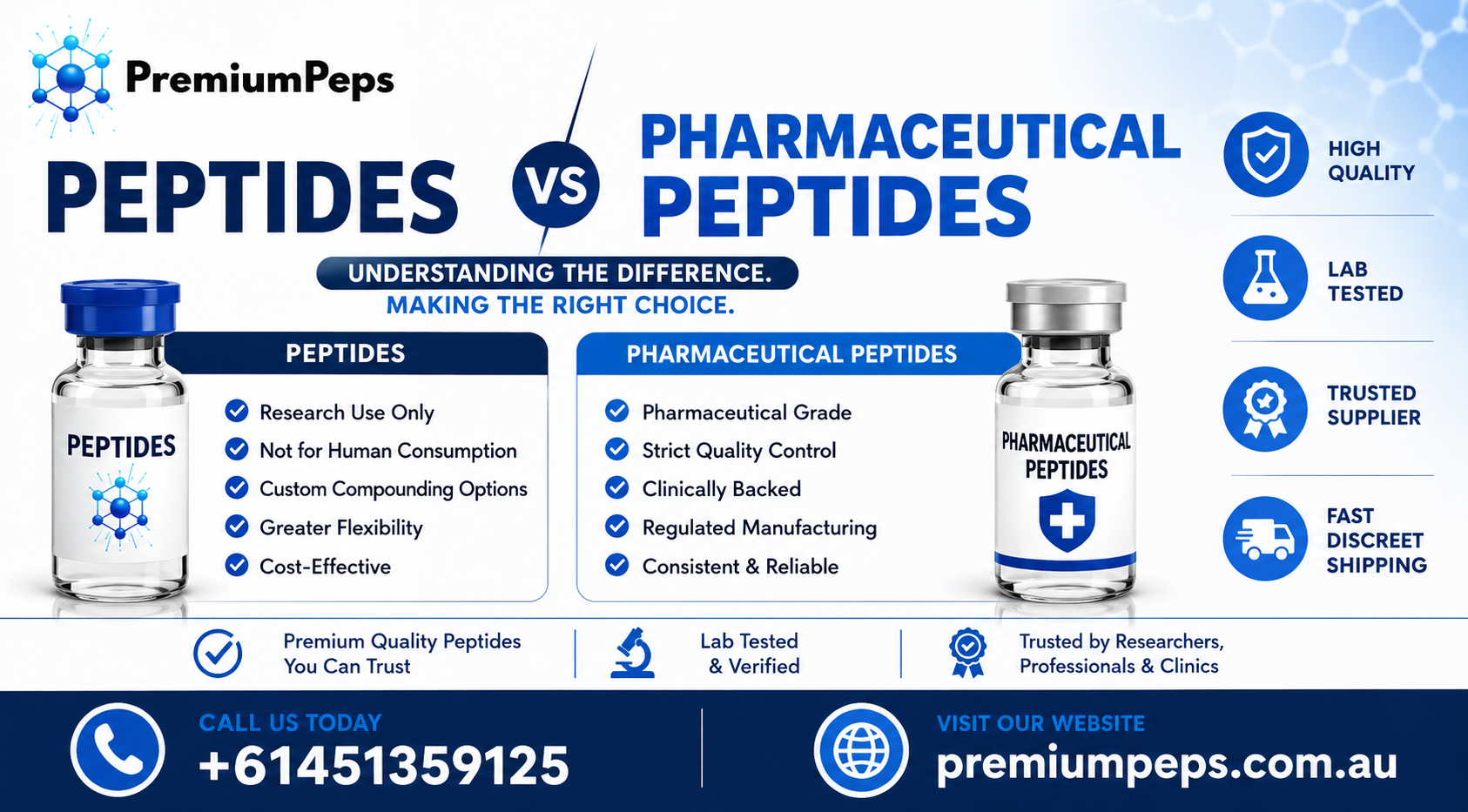
Research peptides are manufactured specifically for laboratory and scientific research and are intended to help researchers study biological processes, molecular interactions, and other scientific questions. Pharmaceutical peptides, on the other hand, are developed as medicines and must undergo extensive clinical testing, regulatory review, and approval before they can be prescribed or supplied for therapeutic use. Research peptides are not approved for human or veterinary use.
What Are Research Peptides?
Research peptides are synthetic chains of amino acids produced for scientific investigation.
They are commonly used in laboratory studies involving:
- Molecular biology
- Cell biology
- Biochemistry
- Biotechnology
- Protein interaction research
- Drug discovery
- Endocrinology
- Regenerative medicine research
Researchers use these materials to better understand biological mechanisms under controlled laboratory conditions.
Products supplied by PremiumPeps are intended for laboratory research purposes only.
What Are Pharmaceutical Peptides?
Pharmaceutical peptides are peptide-based medicines that have been developed for clinical use.
Before becoming available for patient treatment, pharmaceutical peptides typically undergo:
- Extensive laboratory research
- Pre-clinical evaluation
- Clinical trials
- Regulatory assessment
- Manufacturing quality controls
- Ongoing safety monitoring
Only after receiving approval from the relevant regulatory authority can pharmaceutical peptides be supplied for approved medical indications.
Key Differences Between Research Peptides and Pharmaceutical Peptides
| Feature | Research Peptides | Pharmaceutical Peptides |
| Primary purpose | Scientific and laboratory research | Approved therapeutic or medical use |
| Intended users | Researchers, universities, laboratories | Healthcare professionals and patients (where approved) |
| Clinical approval | Not intended for clinical use | Subject to clinical trials and regulatory approval |
| Regulatory pathway | For research use only | Must meet applicable therapeutic regulatory requirements |
| Intended use | Laboratory investigations | Treatment of approved medical conditions |
Understanding these distinctions helps researchers purchase products appropriate for their intended scientific applications.
Why Laboratories Use Research Peptides
Research peptides are valuable tools because they allow scientists to investigate complex biological systems without making assumptions about therapeutic outcomes.
Common research areas include:
- Cellular signalling
- Protein interactions
- Metabolic regulation
- Immunology
- Neuroscience
- Pharmaceutical discovery
- Molecular biology
- Regenerative biology research
Researchers may also study products commonly categorised as:
- Peptides for Recovery
- Peptides for Longevity
- Peptides for Muscle Growth
These descriptions refer to areas of scientific investigation and should not be interpreted as approved therapeutic uses, clinical benefits, or medical claims.
Why Quality Matters Regardless of Purpose
Whether peptides are intended for laboratory research or pharmaceutical development, quality remains a critical consideration.
Using High Quality Peptides helps laboratories achieve:
- Greater consistency
- Improved reproducibility
- Reduced experimental variability
- Reliable scientific observations
- Better research confidence
Selecting a trusted supplier contributes to maintaining high laboratory standards.
Choosing a Trusted Research Peptide Supplier
When sourcing Peptides Australia, researchers should consider suppliers that provide:
- High Quality Peptides
- Clear product information
- Research-use-only documentation
- Secure packaging
- Reliable Australian shipping
- Responsive customer support
- Consistent product quality
- Professional service
A dependable supplier supports research by providing quality products and reliable service throughout the purchasing process.
Why Australian Laboratories Choose PremiumPeps
At PremiumPeps, we understand that reliable research begins with reliable materials.
Based in North Strathfield, NSW, Australia, we proudly supply:
- Peptides Australia
- High Quality Peptides
- Peptides for Recovery
- Peptides for Longevity
- Peptides for Muscle Growth
Why researchers choose PremiumPeps:
- Premium research-grade products
- Australian-owned supplier
- Fast nationwide delivery
- Secure packaging
- Responsive customer service
- Competitive pricing
- Consistent product quality
- Commitment to supporting laboratory research
We work with universities, biotechnology organisations, contract research organisations, and scientific laboratories throughout Australia.
Best Practices When Purchasing Research Peptides
To support high-quality laboratory research:
- Purchase from reputable Australian suppliers.
- Confirm products are intended for research purposes only.
- Follow storage and handling recommendations.
- Maintain accurate laboratory documentation.
- Use products in accordance with institutional protocols.
- Store materials under recommended conditions.
These practices help preserve product integrity and support reliable scientific investigations.
Frequently Asked Questions
Are research peptides the same as pharmaceutical peptides?
No. Research peptides are supplied for laboratory research purposes only, while pharmaceutical peptides are medicines that have undergone clinical development and regulatory approval for specific therapeutic uses.
Can research peptides be used as medicines?
No. Research peptides supplied by PremiumPeps are not approved for human consumption, therapeutic use, diagnostic use, or veterinary use.
Why do laboratories use research peptides?
Researchers use peptides to investigate biological pathways, molecular interactions, cellular functions, and other scientific questions under controlled laboratory conditions.
Why should I purchase from an Australian supplier?
Choosing an Australian supplier offers faster domestic delivery, local customer support, secure shipping, and convenient access to quality research materials.
Why Choose PremiumPeps?
If your laboratory requires dependable research materials, choosing a trusted Australian supplier makes all the difference.
At PremiumPeps, we proudly provide:
- Peptides Australia
- High Quality Peptides
- Peptides for Recovery
- Peptides for Longevity
- Peptides for Muscle Growth
Our commitment to quality, consistency, and professional customer service has made us a trusted supplier for Australian researchers.
Contact PremiumPeps
If you’re looking for trusted Peptides Australia backed by reliable service and quality products, PremiumPeps is here to support your laboratory research.
Business Name: PremiumPeps
Location: North Strathfield, NSW, Australia
Phone: +61 451 359 125
Website: https://premiumpeps.com.au/
Contact PremiumPeps today to learn more about our range of High Quality Peptides and discover why researchers across Australia trust us for dependable laboratory research products.
Disclaimer: All products supplied by PremiumPeps are intended for laboratory research purposes only. They are not for human consumption, therapeutic use, diagnostic use, or veterinary use. Purchasers are responsible for ensuring compliance with all applicable Australian laws, regulations, and institutional research requirements.